Key Concerns for Data Center Safety
Data centers operate in a high-stakes environment where a single unmanaged cable or missing lockout tag can result in life-altering injuries and costly downtime. To protect personnel and maintain the 99.999% uptime standard the industry demands, OSHA-compliant safety protocols must be embedded directly into daily workflows and facility infrastructure. Three critical areas require focused attention: hazardous energy control through lockout tagout (LOTO) procedures, structured cable management to eliminate trip hazards and thermal risks, and clear visual communication via floor markings and standardized signage. The most effective approach is proactive planning during the construction phase, ensuring safety is built into the blueprint rather than retrofitted at greater expense.
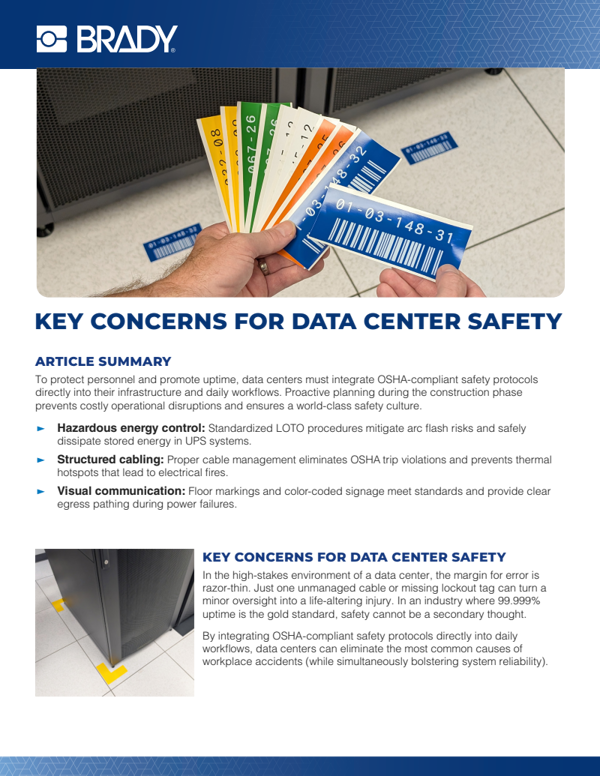
In this guide, you'll explore
- Lockout tagout (LOTO) is the most critical safety protocol in a data center, protecting technicians from arc flash events and stored energy hazards in UPS systems and LED drivers.
- Structured cable management is a core risk mitigation tool, eliminating OSHA 1910.22 trip hazards and preventing thermal hotspots that can lead to short circuits and electrical fires.
- Standardized floor markings and color-coded signage define keep-clear zones, guide emergency egress, and ensure instant hazard recognition — even in low-visibility conditions.
- Access control to high-risk power rooms must be restricted to trained personnel to prevent accidental energy re-engagement by unauthorized staff.
- Building safety into the facility blueprint during the construction phase prevents costly disruptions caused by rearranging heavy, energized equipment to meet compliance requirements later.