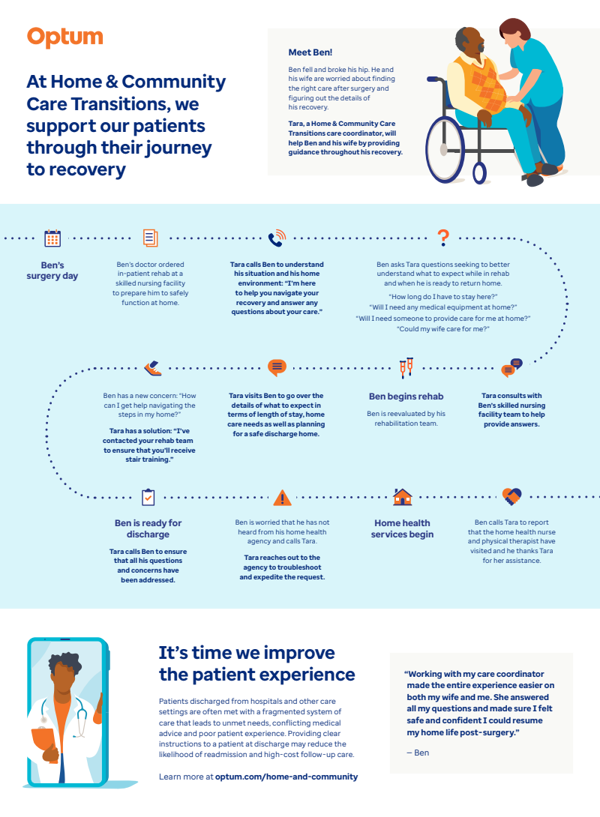
Meet Ben!
Ben, a hip surgery patient, faced uncertainty about his recovery and post-surgical care needs — a challenge many patients experience after leaving a hospital or skilled nursing facility. Through Optum's Home & Community Care Transitions program, care coordinator Tara guided Ben and his wife every step of the way, from understanding rehabilitation expectations to ensuring a safe discharge home. Tara proactively communicated with Ben's care teams, resolved logistical issues with home health agencies, and addressed Ben's concerns about navigating his home environment post-surgery. The result was a confident, well-supported patient who felt prepared to resume his home life. This case illustrates how coordinated care transitions can reduce fragmentation, improve patient experience, and lower the likelihood of costly readmissions.
In this guide, you'll explore
- Dedicated care coordinators provide personalized guidance throughout a patient's entire recovery journey, from surgery day through discharge and beyond.
- Proactive communication between care coordinators and skilled nursing facility teams helps ensure patients receive the right care and training — such as stair navigation — before returning home.
- Care coordinators troubleshoot and expedite home health agency requests, preventing gaps in care after hospital or facility discharge.
- Patients and caregivers benefit from having a single, trusted point of contact to answer questions about length of stay, home care needs, and medical equipment requirements.
- Clear discharge instructions and coordinated care transitions reduce the likelihood of hospital readmissions and high-cost follow-up care.